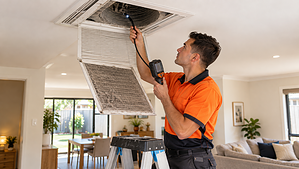
The clearest signs your air ducts need cleaning are dust blowing from the vents, weak or uneven airflow, and a musty smell when the system starts. The other four are visible mould, signs of rodents or insects, recent renovation work, and dust that settles again within a day of cleaning. Any one of these is worth an inspection. Visible mould, pests and heavy debris are the three signs that most clearly justify a clean.
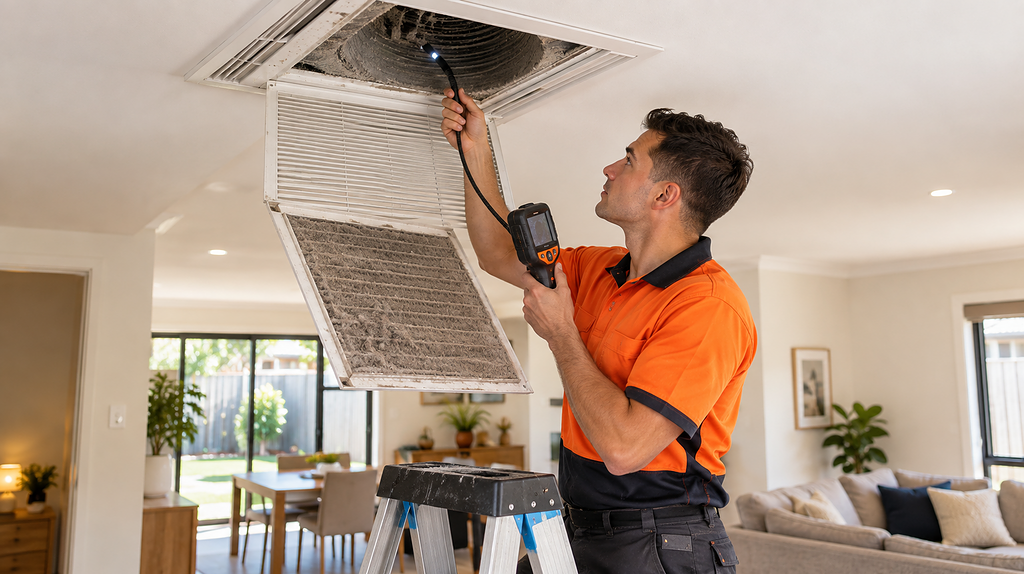
At Solus Air, we clean ducted systems in homes across six states and territories, and every clean includes before-and-after camera footage of the duct interior. That footage shows us that plenty of dusty-looking systems don’t need a deep clean at all. It also shows that some systems that look fine at the vent are badly clogged further in. The signs below help you tell the difference before you spend money.
What are the signs your air ducts need cleaning?
These are the seven signs we look for. Each one is explained in more detail below, including what else could be causing it.
- Dust or debris blowing from the vents
- Weak or uneven airflow between rooms
- A musty or unusual smell when the system runs
- Visible mould on or around the vents
- Evidence of rodents or insects
- Recent renovation or building work
- Dust that returns within a day or two of cleaning
1. Dust or debris blowing from the vents
Dust puffing out when the system starts, or grey streaks on the ceiling around a vent, is the most direct sign. It means particles are sitting in the airstream and being pushed into the room.
The US Environmental Protection Agency lists this as one of three situations where cleaning is warranted: when ducts are “clogged with excessive amounts of dust and debris and/or particles are actually released into the home from your supply registers.” A light film of dust on the vent face is normal. A steady supply of dust coming out of it is not.
2. Weak or uneven airflow
If one or two rooms get barely any air while others are fine, something may be restricting those duct runs. Heavy buildup, debris or a nest can all narrow the path.
Weak airflow has other causes too. A blocked filter, a crushed or disconnected duct in the roof space, or a failing indoor fan all produce the same symptom. Check the filter first. If it’s clean and the problem remains, the system needs a proper fault diagnosis before anyone recommends a clean.
3. A musty or unusual smell from the vents
A damp, earthy or mildew smell that gets stronger when the system starts usually points to moisture and microbial growth somewhere in the system. That could be the ducts, the coil or the drain pan.
Other smells tell a different story:
- Musty or earthy: Moisture and possible mould growth.
- Ammonia-like or rotting: Possible rodent activity or a dead animal in the ducts.
- Burning dust on first use of heating: Usually harmless dust burning off the heating components at the start of winter. If the smell lingers after the first few uses, have the system checked.
The EPA notes that if nobody in the home has related health issues and there is “no musty odor or visible mold growth,” duct cleaning is “probably unnecessary.” A persistent musty smell is the reverse of that, so it’s worth investigating.
4. Visible mould on or around the vents
Black, green or fuzzy spots on the vent face, the duct lining or the indoor unit are a clear sign. The EPA lists “substantial visible mold growth” inside hard surface ducts or on other system components as a reason to clean.
Mould only grows where there is moisture. The Victorian Government’s Better Health Channel states that the way to control indoor mould is to control the source of moisture. A roof leak, condensation on uninsulated ductwork or a blocked drain pan needs fixing first, or the mould returns after cleaning.
Two cautions from our experience. Not every dark mark inside a duct is mould, and the EPA advises asking any provider to “show you any mold they say exists.” Also, if the insulation in an insulated duct gets wet or mouldy, the EPA says it “cannot be effectively cleaned and should be removed and replaced.”
5. Evidence of rodents or insects
Droppings, nesting material, chewed insulation or insect casings near vents or in the roof space mean pests may have been inside the duct system. Infestation by rodents or insects is the EPA’s third trigger for cleaning.
Pest debris is a hygiene issue, and cleaning won’t last while the pests can still get in. Deal with the infestation and seal the entry point before booking a clean, so the ducts don’t get recontaminated.
6. You’ve recently renovated or done building work
Sanding, plastering, demolition and concrete cutting create fine dust that gets drawn into return air grilles and settles deep in the duct runs. If the system ran during the work, some of that dust is almost certainly inside it.
The EPA’s advice is to “seal off supply and return registers and do not operate the heating and cooling system until after cleaning up the dust.” If that didn’t happen, and you notice plaster or sawdust coming from the vents afterwards, a clean once the work is finished is sensible.
7. Dust returns within a day or two of cleaning
If you dust a room and it looks grey again the next day, especially in the rooms closest to the supply vents, the ducts may be recirculating dust.
This one needs care, because pets, carpets, open windows and a clogged filter all add to household dust. It’s the weakest of the seven signs on its own. Start by replacing the filter and looking inside a return grille. If dust still builds up quickly after two weeks, book an inspection.
What does each sign usually mean?
Use this table to work out what to check before you book anyone.
| Sign | What it usually means | Other common causes | What to do first |
| Dust blowing from vents | Heavy buildup in the ducts | Dirty or missing filter | Check the filter, then look inside a return grille |
| Weak or uneven airflow | Restriction in one or more duct runs | Blocked filter, crushed duct, failing fan | Clean the filter, then book a diagnosis |
| Musty smell | Moisture and microbial growth | Wet coil or blocked drain pan | Find and fix the moisture source |
| Visible mould | Active growth in the system | Condensation on uninsulated ducts | Fix moisture, then clean or replace affected sections |
| Pest evidence | Droppings or nesting in the ducts | Pests in the roof space only | Treat the infestation and seal entry points |
| Recent renovation | Construction dust in the duct runs | Dust elsewhere in the house | Clean the house, then inspect the ducts |
| Dust returns fast | Ducts recirculating dust | Pets, carpets, filter, open windows | Replace the filter and monitor for two weeks |
Cleaning triggers based on US EPA guidance on residential duct cleaning. Other causes and first steps based on what our technicians commonly find on inspection.
When is air duct cleaning not necessary?
If none of the seven signs apply, your ducts probably don’t need cleaning. The US EPA states there is “no evidence that a light amount of household dust or other particulate matter in air ducts poses any risk to your health.”
The EPA also says duct cleaning “has never been shown to actually prevent health problems.” That means duct cleaning won’t fix allergies on its own. If a door-knocker or a flyer tells you all ducts need cleaning every year, ask them which of the signs above they have actually seen in your system.
We’d rather tell a customer their ducts are fine than clean a system that doesn’t need it. The camera footage makes that conversation easy, because you can see the condition for yourself.
How can you check your air ducts yourself?
You can do a basic check in about 15 minutes with a screwdriver, a torch and your phone.
- Turn the system off at the controller. Never open grilles or reach into ducts with the fan running.
- Remove the return air grille. This is the large grille, usually in a hallway ceiling, where the filter sits.
- Check the filter. A grey, matted filter explains a lot of dust and airflow problems. Clean or replace it according to the manufacturer’s instructions.
- Look past the filter with a torch. A thin, even layer of dust is normal. Thick clumps, debris, droppings or dark growth are not.
- Photograph one or two supply vents. Unclip a vent if it comes away easily and use your phone camera to look a short way into the duct.
- Do a smell test on start-up. Turn the system back on and stand under a vent for the first minute. Note any musty, ammonia-like or burning smell.
This check only shows the first metre or so of each duct. It won’t show the full run, the coil or the fan, which is why a professional camera inspection is the only reliable way to confirm the condition of the whole system.
Is duct cleaning the same as an air conditioning service?
No. A regular service looks after the equipment, while duct cleaning deals with the ductwork that carries the air. Most homes need a service every year and a duct clean only when the signs above appear.
| Air duct cleaning | Regular air conditioning service | |
| How often | As needed, when signs appear | Yearly, ideally before summer or winter |
| What’s covered | Vents, duct runs, return air and indoor unit | Coils, filters, drainage, refrigerant performance and fault testing |
| Main purpose | Remove heavy dust, mould, pest debris or construction dust | Keep the system efficient and catch faults early |
| Triggered by | Mould, pests, heavy debris, renovation | The calendar, regardless of symptoms |
| Starting price (Solus Air, new customers) | From $419 for an extensive clean | From $239 for a service |
Solus Air pricing as published in 2026. Final pricing is confirmed on site based on the system and access.
A yearly air conditioning service also keeps the coil and drain pan clean, which removes two of the most common sources of mould and smells before they reach the ducts. For a breakdown of typical service prices in NSW, see our guide to air conditioner servicing costs.
How often should air ducts be cleaned in Australia?
There’s no fixed interval that suits every home, and the main sources differ slightly. The Australian Government’s YourHome guide says regular duct cleaning is recommended, “for example at the beginning of the heating or cooling season,” and bundles it with filter cleaning. The US EPA recommends cleaning only when a specific problem exists.
In practice, the two fit together well. Clean filters at the start of each season, as YourHome suggests, and book a full duct clean when one of the seven signs appears. Homes that are more likely to need a duct clean include those with:
- Pets that shed heavily
- Recent renovations or ongoing building work nearby
- A history of roof leaks or condensation problems
- A ducted system with no known service history
Moisture is common in Australian homes. Asthma Australia’s 2022 national survey of 5,041 people found that 50 percent of Australians had mould or dampness in their home in the previous 12 months, which is why we look for moisture sources during every duct inspection.
What should a proper duct clean include?
A proper duct clean covers the full length of every duct run, the return air and the indoor unit. The National Air Duct Cleaners Association says the system should be placed under continuous negative pressure during cleaning, with brushes or air tools used to loosen deposits so they’re captured rather than pushed further in.
Before you book any provider, ask these questions:
- What does the price cover? The vents only, or the full duct runs, return air and indoor unit.
- How is debris captured? Look for a vacuum system that holds the ducts under negative pressure.
- Will I see the inside of the ducts? Before-and-after photos or video are the only practical proof of the result.
- Has the moisture source been found? If mould is the reason for the clean, cleaning without fixing the cause won’t last.
- Is the technician licensed? Panels on the indoor unit may involve refrigerant or electrical work, which needs an ARCtick licence and a relevant trade licence.
Our ducted system cleaning covers the vents, ducts, return air and indoor unit, with footage supplied before and after. Whoever you use, expect that level of detail in writing before work starts.
Frequently asked questions
Can dirty air ducts make you sick?
Light household dust in ducts hasn’t been shown to cause health problems, according to the US EPA. Mould, pest debris and heavy construction dust are different, and can aggravate asthma and allergies. If symptoms get worse when the system runs, have the ducts inspected.
How much does air duct cleaning cost in Australia?
No government body publishes average duct cleaning prices, and quotes vary with the size of the system and roof access. As one example, our extensive clean starts at $419 for new customers in 2026, with the final price confirmed on site. Be cautious of very cheap offers that only vacuum the vent openings.
Can I clean my air ducts myself?
You can clean vent covers, grilles and the filter yourself with a vacuum and a soft brush. The full duct runs, coil and fan need equipment that holds the system under negative pressure, otherwise the dust moves further into the ducts rather than out of them.
Can mould in air ducts be cleaned?
Mould on hard surfaces such as metal ducts and grilles can be cleaned once the moisture source is fixed. Duct insulation that has become wet or mouldy can’t be cleaned effectively and should be replaced, according to the US EPA.
Does cleaning air ducts reduce dust in the house?
It can, if the ducts were heavily loaded with dust and were blowing it into rooms. If the ducts were only lightly dusty, cleaning them will make little difference, and a new filter plus a HEPA vacuum will do more.
Should I clean my ducts after buying a house?
It’s a good idea to have them inspected if the service history is unknown, the house was recently renovated, or previous owners had pets. A camera inspection tells you whether a clean is actually needed before you pay for one.
Where to start
Start with the filter and a torch. If the filter is clean and you see only a light, even layer of dust, your ducts are probably fine, and a yearly service is the better use of your budget. If you see heavy debris, smell something musty, find signs of pests or have just finished a renovation, fix any moisture or pest problem first, then book a full clean with before-and-after footage.
If you’d like a second opinion, our ARCtick-licensed technicians can inspect your ducted system and show you exactly what’s inside before recommending anything. Book a duct inspection and we’ll tell you plainly whether your ducts need cleaning.