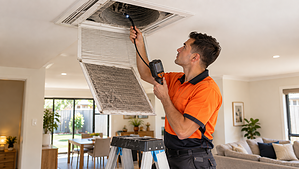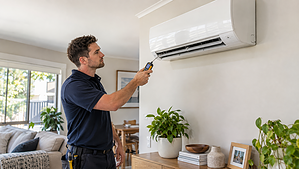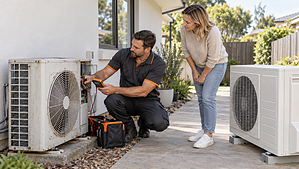

Choosing the right air conditioning technician in Sydney comes down to five things you can check before anyone touches your system: proper licences, valid insurance, real experience, transparent pricing, and a written workmanship warranty. In NSW, air conditioning and refrigeration work legally requires a licence or certificate, so an unlicensed operator is both a safety risk and a legal one. At SolusAir, every technician holds a current ARCtick refrigerant licence and a state electrical or gas ticket, and we back repairs with a 12-month workmanship warranty. The checklist below is the same one we hold our own team to, and you can use it with any provider you are considering.
Why licensing matters most when hiring in Sydney
The single most important check is whether the technician is licensed. In NSW, it is a breach of the Home Building Act 1989 to carry out air conditioning and refrigeration work without a licence or certificate. The penalties are serious: individuals face fines of up to $22,000 for unlicensed work, and companies up to $110,000.
Air conditioners run on refrigerant gas, so a qualified technician also needs a Refrigerant Handling Licence, known as ARCtick, issued by the Australian Refrigeration Council. Handling fluorocarbon refrigerant without one is an offence. On top of that, most installations and repairs involve electrical wiring, which requires a state electrical licence, or gas work, which requires a gas licence.
A properly qualified Sydney technician will hold all of the relevant tickets for the job. Before you book anyone, ask for their licence numbers and check them. You can verify a refrigerant licence on the ARC register and a contractor licence through NSW Fair Trading.
What licences should a Sydney air conditioning technician have?
A technician working on a typical home system should be able to show you:
- An ARCtick Refrigerant Handling Licence to legally work with refrigerant gas.
- A NSW electrical licence for the wiring involved in most installs and repairs.
- A gas licence if the job involves gas heating or a gas-to-electric conversion.
- A contractor or tradesperson certificate under the Home Building Act for the air conditioning work itself.
If a provider cannot produce these, treat it as a reason to walk away. Cheap, unlicensed work can void your equipment warranty and leave you liable if something goes wrong.
Why does insurance and public liability cover matter?
Public liability insurance protects you if a technician damages your property or someone is injured during the job. Without it, you could be left covering the cost of any accident yourself.
Air conditioning work involves electrical circuits, refrigerant lines, roof access, and wall penetrations, so the risk is real. Ask any provider for proof of current public liability cover before work starts. For context, our SolusAir technicians carry $20 million in public liability cover, which is the level of protection you want standing behind work in your home.
How to check experience, reviews, and references
Licences prove a technician is allowed to do the work. Experience and reviews show whether they do it well. A technician who regularly works on your type of system, whether that is a ducted reverse-cycle unit, a split system, or an inverter, will diagnose faults faster and make fewer mistakes.
Look for these signals before you hire:
- Consistent online reviews. A pattern of positive, recent reviews is more telling than a single five-star rating. Read what customers say about punctuality, tidiness, and whether the fault was fixed the first time.
- System-specific experience. Ask how long they have worked on systems like yours. A technician who installs ducted systems every week is a better fit for a ducted job than a generalist.
- References or examples. A reputable provider will happily point to past work or local customers.
You can also ask directly: how long have you worked on systems like mine, and can you share a recent customer we can talk to? Providers with nothing to hide answer these easily.
What transparent pricing and a fair quote look like
Transparent pricing means you get a fixed, written quote before any work begins, with no surprises on the final invoice. This protects you from “bill shock,” where a low headline rate turns into a much larger bill once call-out fees, diagnostic charges, parts, and labour are added.
Be cautious with quotes that look far cheaper than everyone else. Very low prices can be a sign of an unlicensed operator cutting corners, and the Australian consumer group CHOICE recommends using a licensed installer rather than chasing the lowest number.
Our approach at SolusAir is that the quote is the invoice. Your technician diagnoses the fault on site and gives you a fixed price before a single screw turns, so the number you agree to is the number you pay. Whatever provider you choose, ask for the same: a written quote up front, and a clear breakdown of what it includes.
What warranty should air conditioning repair include?
A good technician stands behind their work with a written workmanship warranty. For repairs, look for a guarantee of at least 12 months, so that if the same fault returns, they come back and fix it at no extra cost. New installations should carry a longer workmanship warranty on top of the manufacturer’s warranty on the equipment itself.
When you review a quote, ask exactly what the warranty covers and what happens if the same issue recurs. For reference, we guarantee our repairs for 12 months and our new air conditioning installations for five years of workmanship, separate from the manufacturer’s parts warranty.
Does ongoing training and accreditation matter?
Yes. Air conditioning technology changes, and refrigerants and system types are updated regularly. Technicians who keep their qualifications current work more safely and troubleshoot modern systems more accurately.
The ARCtick scheme is underpinned by ongoing compliance, with the Australian Refrigeration Council conducting thousands of audits each year to keep licence holders accountable. When you are comparing providers, it is fair to ask whether their technicians hold current accreditation and complete regular training.
The checklist to compare Sydney air conditioning technicians
Use this table to score any technician you are considering. A provider worth hiring will pass on every row.
| Selection criterion | Why it matters | How to verify |
| Licensing (ARCtick, electrical, gas) | NSW law requires a licence for air conditioning work. Unlicensed work risks fines up to $22,000 and safety issues. | Ask for licence numbers and check them on the ARC register and NSW Fair Trading. |
| Public liability insurance | Covers property damage or injury during the job. Without it, you could be liable. | Request a current certificate of insurance. |
| Experience and reviews | Technicians familiar with your system diagnose faster and make fewer errors. | Read recent online reviews and ask for references. |
| Transparent, fixed pricing | A written quote prevents surprise charges on the final bill. | Get a fixed written quote before work starts. |
| Workmanship warranty | Shows the provider stands behind their work. | Confirm the warranty length, ideally 12 months or more on repairs. |
| Ongoing training and accreditation | Keeps skills current for modern systems and refrigerants. | Ask about recent training and current ARCtick accreditation. |
Questions to ask before you hire an air conditioning technician
A short conversation reveals a lot. Before you book, ask a provider:
- Are your technicians ARCtick licensed, and can you share the licence numbers?
- Do you carry public liability insurance, and can I see the certificate?
- Is the quote fixed, and does it include the call-out fee, parts, and labour?
- What is your workmanship warranty, and what happens if the same fault comes back?
- How long have you worked on systems like mine?
Clear, direct answers are a good sign. Vague responses, pressure to skip a written quote, or reluctance to share licence details are all reasons to keep looking.
Frequently asked questions
Do you need a licence to install a split system in NSW?
Yes. Installing a split system in NSW requires a licensed technician, because the work involves refrigerant and electrical connections. Doing this work without a licence breaches the Home Building Act 1989 and can carry fines of up to $22,000 for an individual.
How can I check if an air conditioning technician is licensed?
Ask for their ARCtick licence number and contractor licence number, then verify them on the Australian Refrigeration Council register and the NSW Fair Trading licence check. A legitimate technician will share these numbers without hesitation.
How quickly can you get an air conditioning technician in Sydney?
Same-day service is realistic for common faults if the provider has local technicians. At SolusAir, our average response time is under 30 minutes, and we offer same-day air conditioning repairs when you book before 11am, with your arrival window confirmed by text so you are not waiting at home all day.
Is a cheaper quote worth the risk?
Not usually. A quote well below the market rate often signals an unlicensed operator or hidden charges added later. A fixed written quote from a licensed technician gives you a fair price and protects you from unexpected costs.
Hire with confidence
Choosing the right air conditioning technician in Sydney is straightforward when you check the fundamentals: licences, insurance, experience, transparent pricing, and a written warranty. A technician who passes every one of these does the job safely, reliably, and at a fair price.
If you would like a licensed Sydney technician who works to exactly this standard, contact SolusAir for a fixed-price quote and same-day service.